
apnabusinessbadhao.com

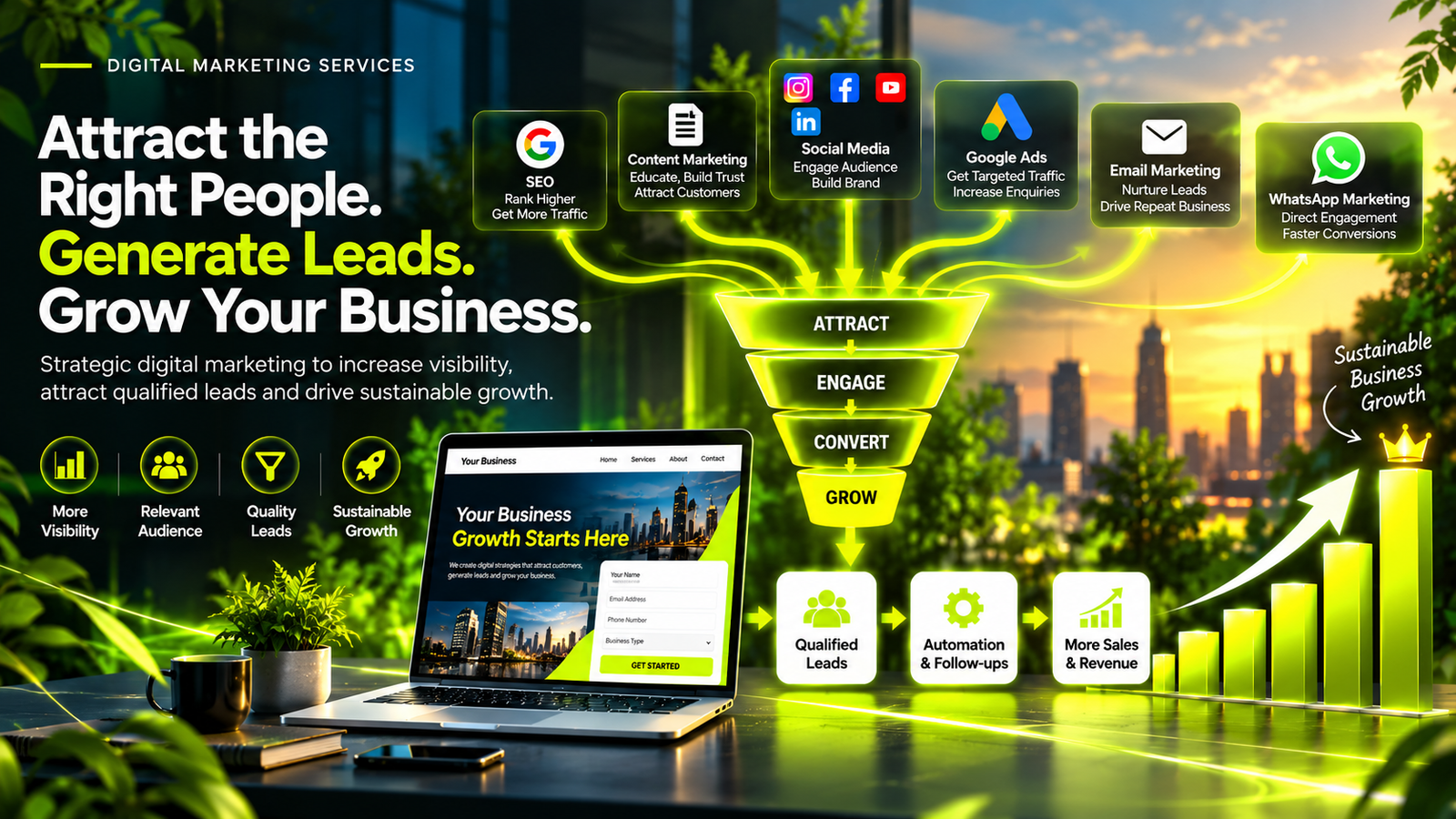
Digital Marketing Growth Funnel apna business badhao dot com

Get Discovered by the Right People. Turn Attention into Opportunities.

our business deserves more than occasional posts and disconnected marketing activities. It needs a clear message, relevant visibility and a practical path from discovery to enquiry.

Our focus is on helping you reach the right audience, answer their questions and make it easier for interested people to take action.

Build visibility. Earn trust. Create a more organised path to growth.

Apna Business Badhao Dot Com helps businesses explore digital marketing strategies that connect website content, search engine optimisation, social media, landing pages and lead-generation workflows.

Is Your Marketing Creating Business Opportunities?

Many businesses invest time in social media, website content and online promotion but struggle to understand which activities contribute to meaningful enquiries.

Common challenges include:

  • Potential customers cannot easily find the business online.

  • Marketing activities are inconsistent or lack a clear plan.

  • Social media engagement does not translate into useful enquiries.

  • Website visitors do not understand the offer or know what to do next.

  • Content is published without addressing real customer questions.

  • Marketing performance is difficult to measure.

  • The business depends heavily on one marketing channel.

  • There is no organised process for responding to incoming leads.

The solution is not necessarily to do more marketing. It is to connect the right channels with a clear objective, useful content, a suitable offer and a measurable customer journey.

Digital Marketing Services Designed Around Your Goals

1. Search Engine Optimisation (SEO)

Improve your website’s structure and content so search engines and visitors can better understand your services. Work may include keyword research, page optimisation, internal linking, metadata, content planning and technical checks.

2. AI Search and Answer-Focused Content

Develop useful content that answers customer questions directly, explains your services clearly and provides specific information that search engines and AI-powered systems can interpret.

This includes Answer Engine Optimisation (AEO) and Generative Engine Optimisation (GEO) principles. No content strategy can guarantee recommendations by a particular AI platform.

3. Social Media Strategy and Content Planning

Organise content around customer education, service explanations, useful tips, brand identity and relevant calls to action.

4. Content Marketing

Plan and develop service pages, articles, FAQs and educational resources that help customers understand their options and make informed decisions.

5. Landing Pages and Lead Generation

Create focused landing pages, enquiry forms and conversion paths designed to encourage relevant actions such as requesting a consultation or asking for a quote.

6. Campaign Planning

Develop an organised approach to campaign messaging, target audiences, content and landing pages. Paid advertising can be considered where the budget and business objective justify it.

7. Marketing Analytics and Reporting

Review available metrics such as website traffic, enquiry submissions, engagement and conversion rates to identify opportunities for improvement.

8. Marketing Workflow Automation

Explore suitable tools for content planning, enquiry notifications, reporting and follow-up coordination, with appropriate review and data controls.

Digital Marketing for Businesses at Different Stages

  • Startups: Introduce a new business, explain the offer and develop a consistent online presence.

  • MSMEs: Improve service visibility and build a more organised enquiry-generation process.

  • Local businesses: Help customers find accurate service information and understand how to get in touch.

  • Consultants and professionals: Publish useful information that explains expertise and supports trust.

  • Ecommerce businesses: Improve product discovery, content organisation and customer journeys.

  • Agencies and service providers: Develop repeatable content, campaign and reporting workflows.

The appropriate channel mix depends on your audience, competition, budget, business model and capacity to respond to enquiries.

From Visibility to Meaningful Enquiries

  • Step 1 — Understand your audience: Identify who you want to reach, what they need and how they search for solutions.

    Step 2 — Review your current presence: Examine your website, content, social media and existing enquiry journey.

    Step 3 — Set priorities: Choose realistic objectives, such as improving service-page visibility, increasing relevant enquiries or improving lead tracking.

    Step 4 — Plan the strategy: Select suitable channels, content topics, landing pages and calls to action.

    Step 5 — Implement the agreed activities: Develop content, improve pages and configure relevant tracking.

    Step 6 — Measure and learn: Review available performance data and identify what should be improved.

    Step 7 — Refine the approach: Adjust the strategy based on evidence rather than assumptions.

    Search rankings, leads and sales cannot be guaranteed. Results depend on competition, demand, execution, budget and other factors.

From Visibility to Meaningful Enquiries

F.A.Q.

Start with a clear website or service page, accurate business information, useful content and a way to measure enquiries. SEO, social media and paid campaigns can then be prioritised according to the target audience and budget.

SEO is a gradual process. The time required depends on competition, site condition, content quality, technical issues and search demand. Rankings and enquiries cannot be guaranteed within a fixed period.

It can help attract and convert potential customers when the offer, audience, messaging and enquiry process work together. Lead quality and volume depend on demand, competition, budget and follow-up.

Social media can be valuable, but relying on one channel may limit flexibility. A suitable combination of website content, search visibility and social media can create more opportunities for discovery.

Not always. Organic content and SEO can support visibility over time. Paid advertising may be suitable when you have a clear offer, a defined budget and a landing page that supports the campaign objective.